
Slow juicer or centrifugal juicer: what you actually notice at home
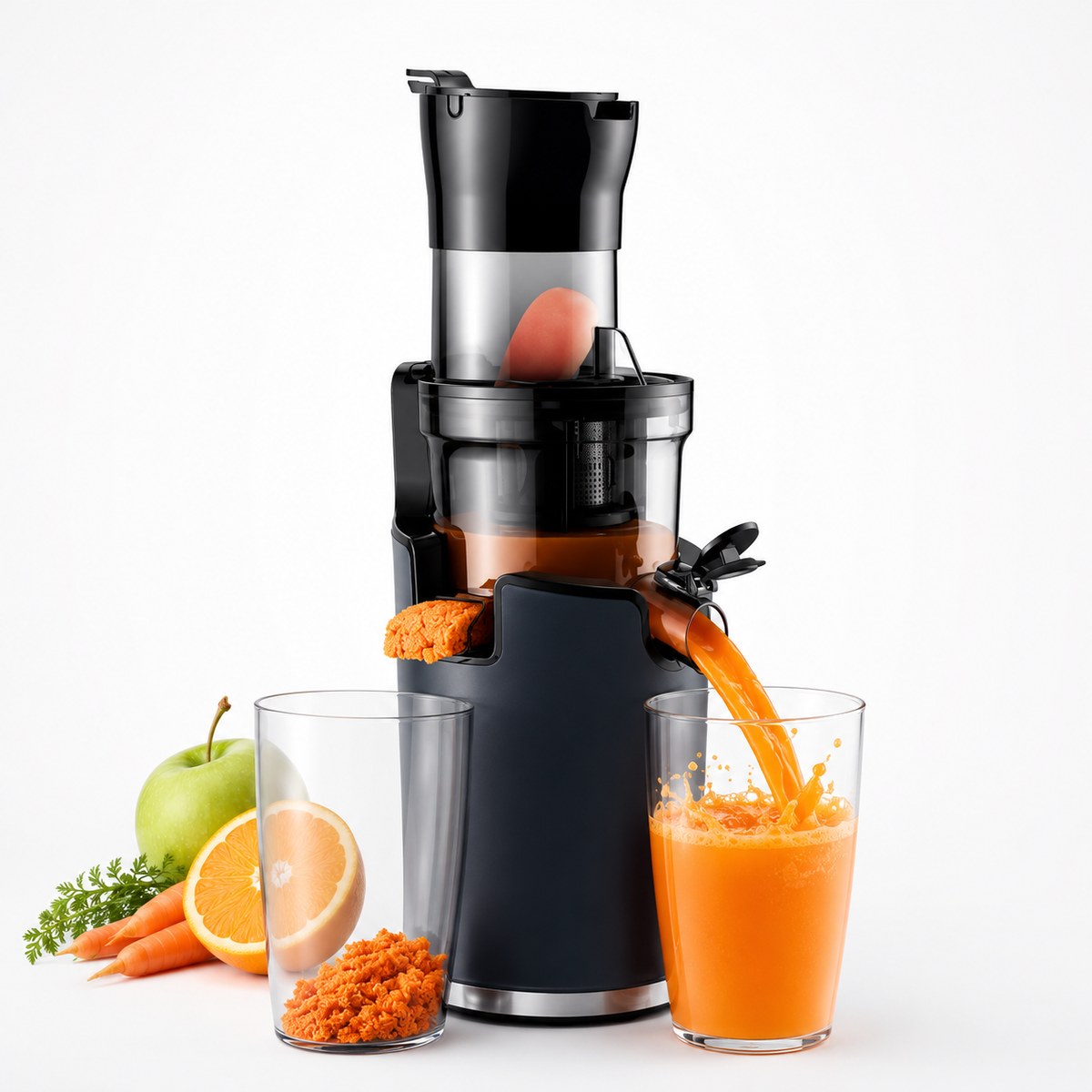
The question usually boils down to this: is the slow pressing worth the money and the extra hassle? The honest answer depends on what you put in and how often.
Two very different machines
A centrifugal juicer shreds fruit against a fast spinning screen, typically around 12,000 rpm. Centrifugal force throws the juice through the holes and the pulp stays behind. Fast, loud, and it whips air into the juice.
A slow juicer runs at 40 to 80 rpm. An auger pushes the fruit against a screen and squeezes it out, roughly the way you wring out a cloth. Almost no heat or air involved.
Where you notice it
Yield. With hard produce like apple and carrot the two are closer than the marketing suggests. The gap opens up with leafy greens. Spinach, kale and wheatgrass are nearly hopeless in a centrifugal machine because there is not enough liquid to fling out. A slow juicer does get juice from them.
Shelf life. Juice from a centrifugal machine separates within an hour and grows a foam layer on top. From a slow juicer it keeps for a day or two in the fridge. If you want to press in the morning for the whole day, that is the deciding argument.
Cleaning. The slow juicer loses here. A centrifugal machine takes two minutes, screen under the tap and done. A slow juicer has more parts and the screen needs a brush. Count on five minutes. Skip it and the pulp dries on, which makes it worse.
Noise. A centrifugal juicer screams. A slow juicer hums. If you press at seven in the morning while the house is asleep, that is not a detail.
What to look for
- Wattage matters less than you think. 150 to 250 watts is plenty for a slow juicer, because the force comes from the gearing rather than the speed.
- Check the feed chute. A narrow opening means quartering every apple, and that is exactly why appliances end up in a cupboard.
- Ask whether parts can be ordered separately. The screen is the part that wears.
- Dishwasher safe helps less than you hope, since the fine screen still needs doing by hand.
What I would do
If you mostly drink orange and apple juice and just want a quick glass, a centrifugal juicer is fine and cheaper. If you plan to press celery, cucumber and leafy greens, or want to work a day ahead, a slow juicer is a noticeable step up.
We sell the Cold Press Juicer 200W. It sits in the segment most people should be pointed to: enough torque for carrot and celery without the price of a commercial machine.
One practical tip you rarely read anywhere. Alternate hard and soft while pressing. A handful of spinach followed by a piece of carrot rinses the screen almost by itself, and that saves you scrubbing later.